If I Started My Bakery Over Today, Here’s Exactly What I’d Do
Oct 20, 2026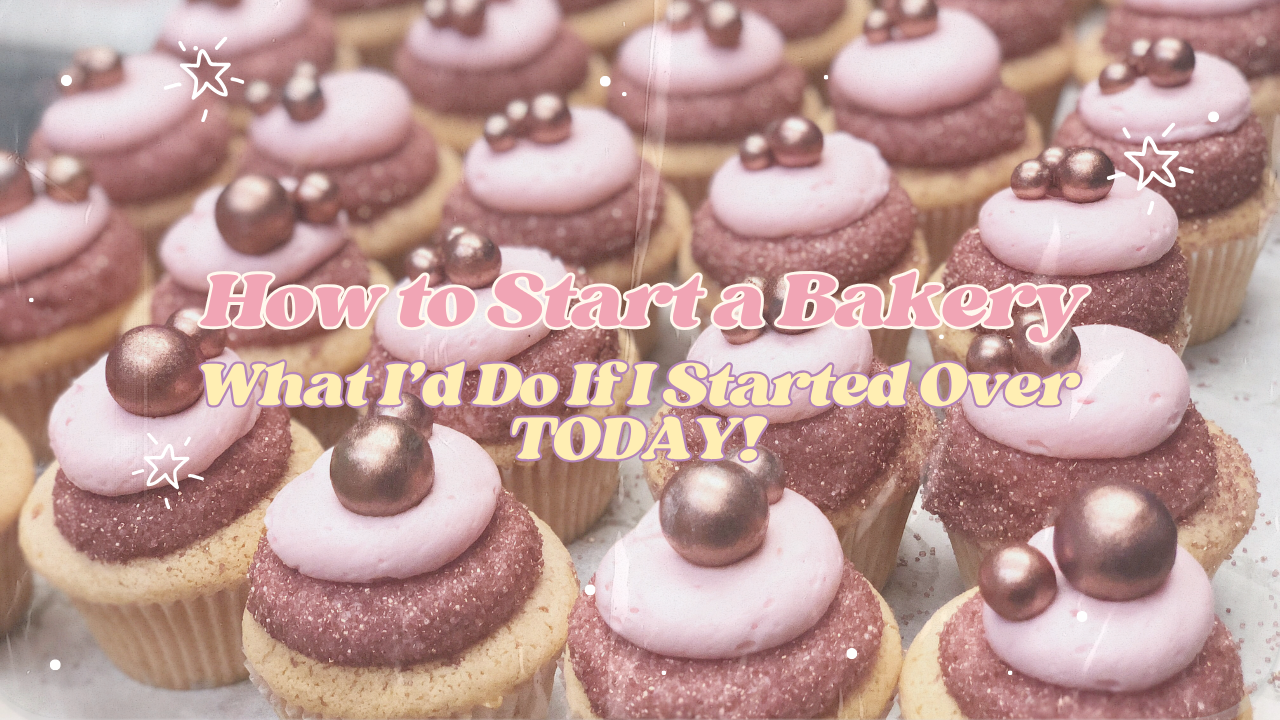
If I could go back to 2009 and start my bakery all over again, I can promise you there are A LOT of things I’d do differently!
And no, I'm not just talking about buying better equipment, perfecting my recipes, or spending six months designing the perfect website or logo.
I'm talking about how I OPERATED and RAN my bakery business. The stuff nobody wants to talk about when you're dreaming of turning your passion into a paycheck.
Here’s what I learned the hard way…
Being a GREAT baker and running a GREAT bakery BUSINESS are two VERY different things.
When I started The Cake Mamas in 2009, I had NO formal business training, had just filed for bankruptcy, and had absolutely NO idea what I was getting myself into.
My husband and I just lost our 6-figure corporate jobs, so I was trying to build something for myself and my family and figuring shit out as I went.
And I DID figure it out.
Over the next 12 years, I built The Cake Mamas into a seven-figure bakery business, grew a team of more than 20 employees, had two locations, and won Food Network's Cupcake Wars and Cake Wars.
But behind all those pretty cakes, products, record-breaking sales goals, and exciting milestones? There were some VERY expensive lessons.
Lessons that cost me money, time, sleep, and more than a few tears.
And looking back, some of those mistakes were COMPLETELY avoidable.
I just didn't know what I didn't know.
Which brings me to YOU.
Whether you're thinking about starting a bakery from home, selling your first dozen cupcakes, or dreaming about opening your own storefront someday, I want you to understand something…
You do NOT have to spend the next 10 years learning everything the hard way, like I did.
And you DEFINITELY don't have to go broke trying to build a business that's supposed to MAKE you money.
So, if I were starting a bakery business from scratch TODAY, knowing everything I know now about pricing, profitability, marketing, systems, and growing a business that doesn't completely consume your life…
Here are the 7 things I'd do differently, and the EXACT order I'd do them in.
Let's get into it.
1. Set Up the Legal & Financial Foundation Before Selling a Single Cake
One of the biggest mistakes I made early on in setting up my business is I co-mingled ALL my money; that includes my personal and business finances. So essentially, I didn’t know what portion of my bank account was MY PAY vs. the PROFIT for my business.
I didn’t have a TON of money when I started my business. In fact, I pulled my 401K to just get started. I had filed for bankruptcy, so getting a loan wasn’t an option. If I had known about building business credit, I would’ve been able to rely on corporate credit vs. my own credit score.
You can do this by registering your business as an LLC or corporation, getting an employer identification number (EIN), and registering with Dun & Bradstreet (DUNS). By doing this, you’re able to open vendor accounts with wholesale companies like ULINE that report monthly payments to establish corporate credit so you can borrow on the company’s merit.
After you register your business, I would HIGHLY recommend trademarking your name and logo. The cost is going to depend on the level of protection you want, but by securing this business property, you PROTECT yourself from someone else potentially stealing or capitalizing on your name/brand.
I had to learn this the hard way when another bakery named The Cake Mama opened in the UK. Luckily, I was in the U.S., and I was protected there, but I had no say over this other business because my trademark protection didn’t reach a global level.
Lastly, for those that don’t know, I started my bakery with a partner, and that partner was my husband’s ex and the mother to my two eldest daughters. (YUP, you read that right!)
A few years into our business, we decided to part ways because we had different visions for the business and we no longer aligned on our goals. One of my biggest regrets is not sitting down with my partner at the time and having the uncomfortable conversations that were necessary.
We never talked about financial responsibilities, how we wanted to manage, leadership roles, where we foresaw the business going, and potential exit strategies. So to say our breakup was messy is an understatement.
So if you are debating on entering into a partnership, draft a partnership agreement and have these difficult conversations UP FRONT, before you go all in together on a business.
2. I would measure all my RECIPES in GRAMS.
When I first started pricing out my products and developing recipes, I did everything in cupcakes and tablespoons for my measurements. Now that I’ve built a tool that helps bakers price out their products for profit down to the penny, I’ve realized that measuring in grams is one of the BEST operational shifts a baker can make for consistency and financial clarity! And I say this for a few different reasons.
- Measuring in grams eliminates kitchen errors and standardizes quality: volume measurements (cups, tablespoons) can be inconsistent. Grams eliminates conversion errors and ensures that every batch, regardless of WHO is making it, is identical to how it’s supposed to look and taste.
- The precision of COSTING down to the penny: You can’t accurately price out a product if you’re guessing how much batter or frosting goes into a single product. By using a scale and weighing things out, you know exactly the cost per serving down to the cent rather than guessing.
- Allows you to scale your recipes seamlessly: Grams allows you to scale a recipe up or down for any custom batch size or bulk production as you grow without messing up the ratios or guessing conversions.
3. Price as a “FOR PROFIT CEO” from DAY 1
Most bakers make the mistake of pricing their products using a NON-PROFIT formula when they first start. They pay themselves, BUT their business is left behind.
Instead, you wanna make sure you’re using the formula: Total Costs + Labor Costs (Salary) + DESIRED PROFIT = Selling Price.
Labor is what pays YOUR BILLS. Profit is what gets REINVESTED back into the business for when you’re ready to hire, buy new equipment, save for a lease, etc.
But this formula only works as well as the numbers you put into it, which means TRACKING your costs down to the penny and understanding your baseline metrics (daily revenue number) is just as crucial.
4. Stay Home Until You OUTGROW Your Systems (NOT JUST YOUR SPACE)
I started my business from my home, and I opened my first storefront 18 months later. I did so SEVERELY undercapitalized, which is why I now recommend to my clients and students to focus on outgrowing SYSTEMS vs. your space.
Starting from home is LOW-RISK and COST-EFFECTIVE, which means it’s the perfect time to build a SOLID foundation. Focus on stabilizing cash flow, refining your menu, developing SOPs and building a loyal client base.
So many bakers romanticize having a storefront and everything being "easy.” By “easy” I mean, once they open a storefront, they think the sales and the customers will come. But sis, if the sales and customers weren’t coming when you were at home, that isn’t going to change once you open a storefront. If anything, it’s going to AMPLIFY the problems you already do have.
A storefront is not a magic fix. It’s the opposite.
Consider a brick-and-mortar location ONLY when you have a proven concept, consistent month-over-month profit, and cash reserves and are already managing a payroll from home.
5. Focus on SYSTEMS, NOT being the bottleneck
Solopreneurship is completely OVERRATED, and I stand by that.
In the beginning, you will be forced to do MOST everything on your own. But it’s not meant to be that way forever if you truly wanna expand and grow your business.
A lot of business owners in the beginning fall into the trap of solopreneurship and find that no one can do it better than they can. However, by doing this you’ve made yourself the bottleneck to your own freedom and lead directly to burnout.
Instead, create written processes for every repeatable task—taking inquiries, order workflows, baking, filling/frosting, cleanup, and post-order follow-ups—so whenever you are ready to bring in help, they aren’t starting from nothing.
One of the ways you can do this is by implementing red light, yellow light, and green light tasks. Green light tasks are tasks ANYONE can do, such as packaging, prepping, dishwashing, and administrative emails, so you can spend your time operating as the CEO (vision, strategy, marketing) rather than a trapped technician.
Eventually, as they learn more, you can introduce more advanced tasks like yellow light and red light tasks. You as the business owner SHOULD NEVER be doing green light tasks.
6. Treat Marketing & Sales as 50% of the Job
No money. No Mission.
You can be the MOST TALENTED baker in the world, but talent and skill mean nothing if you can’t generate the cash flow required to sustain the business.
And in order to create cash flow, you need to focus on getting customers. This is where marketing and sales come in. Stop expecting products to "sell themselves.”
Instead, focus on active local outreach, building an email subscriber list, connecting with local corporate partners, and executing post-order review and referral systems from the beginning.
7. Protect Your Health & Treat REST as a Business Strategy
I can’t say this enough: your body and health are your PRIMARY business asset. Without you, your business is nothing.
Working in pain, pulling constant all-nighters, or ignoring medical needs is not sustainability—it's "survival mode dressed up as entrepreneurship.” I know this because I’ve been there. I was told that in order to grow and be successful, you needed to work HARD. I didn’t have time to take a break or go to doctor's appointments.
And looking back, I think the stress I put my body through while building my business lead to early menopause and burnout.
So please, plan breaks and vacations in advance—especially during naturally slow seasons (like the summer months or winter)—so you can recharge, gain creative clarity, and return READY, motivated, and inspired to make high-level business decisions.
The BIGGEST Lesson I'd Take Into Starting a Bakery Today
If there's ONE thing I hope you take away from this, it's that you can be an INCREDIBLE baker and still build a business that fails you.
I spent 12 years learning that lesson through trial and error, expensive mistakes, and more sleepless nights than I care to admit.
And while I wouldn't trade the experience or the lessons for anything, there are DEFINITELY things I wish I had done differently.
I would've protected my money sooner. Understood my numbers from DAY ONE. Built better systems BEFORE I needed them. And stopped believing that working harder was always the answer to growing a successful business.
Because here's what I know now that I didn't know back in 2009…
The goal isn't to build a bakery that can't survive without you. The goal is to build a BUSINESS that doesn't REQUIRE you to sacrifice everything to keep it alive.
And friend, whether you're just getting started or you're already a few years into your baking business, it's NEVER too late to start doing things differently.
You don't need a bigger kitchen, a prettier website, or another 10,000 followers to start making better business decisions.
You need to understand your numbers, get intentional about your sales, put systems in place, and start thinking like the CEO of a FOR-PROFIT business.
And you definitely don't need to spend the next decade figuring all of this out on your own.
That's exactly why I created Power Hour.
Every week, I get together with fellow bakers and small business owners to work through the REAL challenges of running a business. We're talking pricing, profitability, marketing, systems, hiring, and ALL the things nobody teaches you when you're learning how to bake.
Because making pretty things is GREAT.
But making pretty things that actually make you MONEY? Even better.
Join me inside Power Hour and let's build a business that WORKS for you.