How to Price Your Baked Goods: 3 Things Every Baker Needs to Organize FIRST!
Nov 10, 2026
If you're still figuring out what to charge for your cakes, cookies, cupcakes, or other baked goods by looking at what everybody else is charging on Instagram… FRIEND. We need to talk.
Pricing by vibes is NOT cutting it. We’re not bringing that energy into 2027!
Listen to me when I tell you, you can make the most STUNNING, TASTIEST baked goods in the world. You can have customers lining up around the block for your cupcakes. You can have customers setting alarms for your weekend cookie drop. You can sell out every single weekend.
But if you don't know what it actually COSTS to make the products you're selling, how do you know whether you're actually making any money?
And before you tell me, "Well, I know how much my ingredients cost…"
Do you, though? Because knowing that you spent $47 at the grocery store is NOT the same as knowing exactly how much it costs to make one chocolate chip cookie.
And knowing that you sold $2,000 worth of desserts last weekend doesn't automatically mean you made $2,000.
Revenue is NOT profit. And being booked and busy doesn't mean your business is making money.
I've been coaching and consulting bakery owners since 2017 and one thing I’ve noticed is bakers love to attach a price to a product BEFORE they even figure out how much it costs for them to make it.
They're looking at competitors' prices, asking other bakers what they'd charge, or picking a number that feels reasonable.
But without knowing your actual costs, how can you possibly know if that number makes sense for YOUR business?
You can't price accurately with information you haven't organized.
So if you're serious about pricing your baked goods for PROFIT in 2027, there are THREE things every baker needs to get organized.
And no, you don't need to be an Excel expert to do it.
1. Start With Your Ingredients & Supplies
Before we PRICE anything, we need to know what you’re actually spending.
And I'm not talking about making a list that says:
- Butter: $5
- Sugar: $4
- Flour: $6
That's a start, but it's not enough.
You need to know WHAT you're buying, WHERE you're buying it, HOW MUCH you're getting, and WHAT you're paying for it.
For example:
Let's say you purchase a 25-pound bag of flour from Costco for $14.99.
That's useful information!
But if you're buying that same flour in a 5-pound bag at your local grocery store for $5.99, your cost per ounce is going to be VERY different.
And that difference matters when you're calculating the cost of every recipe that uses flour.
Here's what you need to document for EVERY ingredient and supply you regularly purchase:
- Item name: What exactly are you buying?
- Supplier: Where are you buying it?
- Purchase size: Is it a 5-pound bag? A 32-ounce bottle? A case of 500?
- Purchase price: How much are you actually paying?
And don't forget about your SUPPLIES.
Cake boards. Boxes. Cupcake liners. Packaging. Labels. Ribbon. Those cute little stickers you put on every order.
ALL OF IT. Because those things cost money, too.
And when you're leaving them out of your pricing just to keep your products "affordable," guess who's paying for them?
YOU.
Your ingredients and supplies are the foundation of your product costs. If those numbers aren't accurate, everything you calculate afterward is already off.
2. Organize ALL of Your Recipes
Now that we know what you're buying and what you're paying for it, we need to organize your recipes.
And this is where I see a LOT of bakers putting off doing the work, because it feels like “TOO MUCH.”
Why does it feel like that? Well, because most of the products you’re selling aren’t made from just ONE recipe. There’s multiple.
Let's take a chocolate salted caramel cupcake, for example.
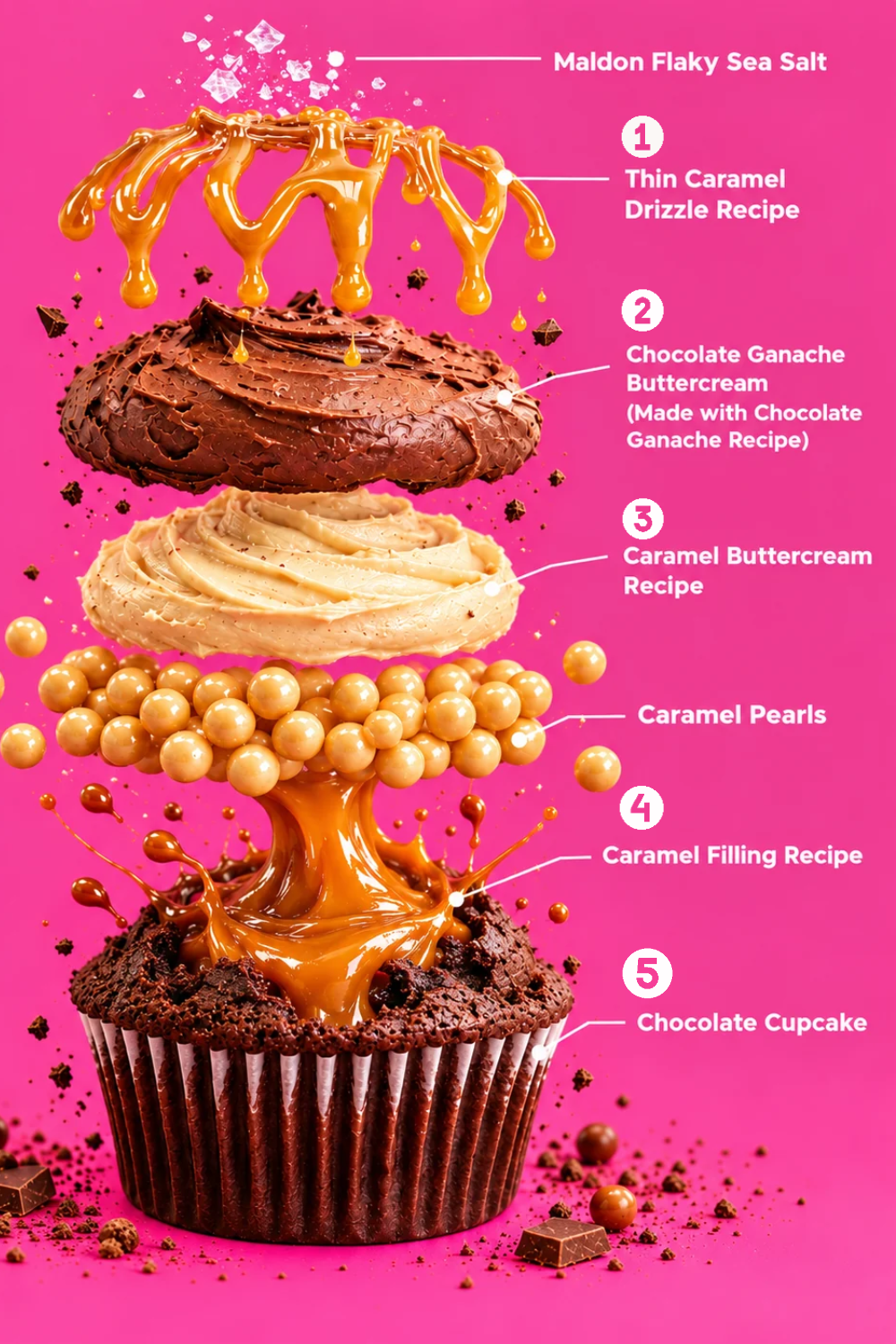
Sounds simple enough, right?
Except that ONE cupcake might actually require FIVE different recipes:
- Chocolate cupcake batter
- Salted caramel filling
- Caramel buttercream
- Caramel drizzle
- Chocolate Ganache
And each one of those recipes has its own ingredients, quantities, costs, and yields.
Which means if you're only calculating the cost of the chocolate cupcake batter, you're missing a HUGE part of the WHOLE picture.
Now imagine you're selling 15 different cupcake flavors, 10 different cookies, and a whole menu of custom cakes.
How many different recipes and components are you actually using?
This is why I want you to organize your recipes INDIVIDUALLY.
For each recipe, document:
- The recipe name
- Every ingredient used
- The exact quantity of each ingredient
- The total batch yield (how much that recipe makes)
That last one is super important because, knowing that your buttercream recipe costs $12 to make doesn't tell you how much buttercream you're using on a single cupcake.
You need to know how much the recipe produces AND how much of that recipe goes into each finished product.
And here's something else I want you to think about.
What happens when the price of butter goes up?
If you use butter in 20 different recipes, that price increase affects ALL 20 recipes.
But if your recipes aren't organized, how would you even know which products are affected?
THIS is why organization MATTERS.
It's not just about knowing what goes into your products.
It's about understanding how changes in your ingredient costs affect what you're actually making.
3. Organize Your PRODUCTS (Not Just Your Recipes)
Okay, now that your ingredients and recipes are organized, now we have to connect everything.
Because a recipe and a product are NOT the same thing, friend.
A recipe is something you MAKE.
A product is something you SELL.
And understanding that difference is a GAME CHANGER when it comes to your pricing.
Let's revist that chocolate salted caramel cupcake.
We already know it requires five recipes.
But your customer isn't buying five recipes. They're buying ONE finished cupcake.
Which means we need to figure out exactly what goes into that finished cupcake before we can calculate what it costs to make.
Here's how I want you to organize your products.
First, create your product categories.
For example:
- Cakes
- Cupcakes
- Cookies
- Brownies & Bars
- Macarons
- Specialty Desserts
- Bread & Pastries
Next, list every individual product you sell under the appropriate category.
Under Cupcakes, you might have:
- Vanilla
- Chocolate Salted Caramel
- Strawberry
- Cookies & Cream
Then, connect each product to ALL the recipes it requires.
For your Chocolate Salted Caramel Cupcake, that would look something like this:
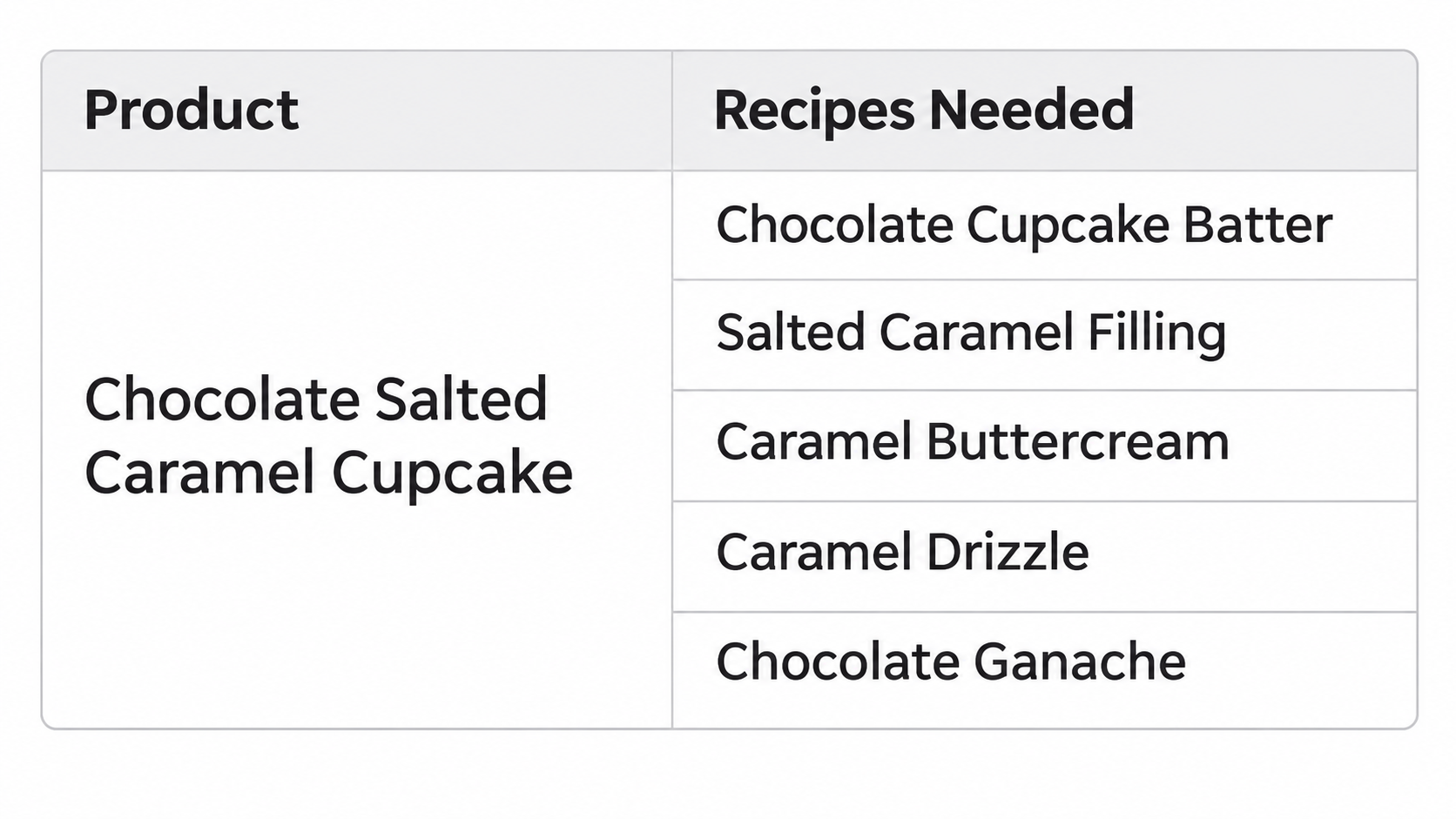
You'll also need to document how much of each recipe goes into the finished cupcake.
And don't forget the cupcake liner, packaging, and any other supplies you're using.
See where I'm going with this?
Once everything is connected, you're no longer guessing what it costs to make that cupcake.
You have the information you need to CALCULATE IT.
And once you add your labor, overhead, and other relevant business expenses, you can start making actual pricing decisions based on REAL NUMBERS, not vibes.
**Here's Where Things Get REALLY Interesting…**Because organizing your ingredients, recipes, and products isn't just about calculating your costs.
It's about figuring out which products are actually making you MONEY.
And I hate to be the one to tell you this, but someone has to… Your BESTSELLER isn't necessarily your most PROFITABLE product.
Let's say you sell two products:
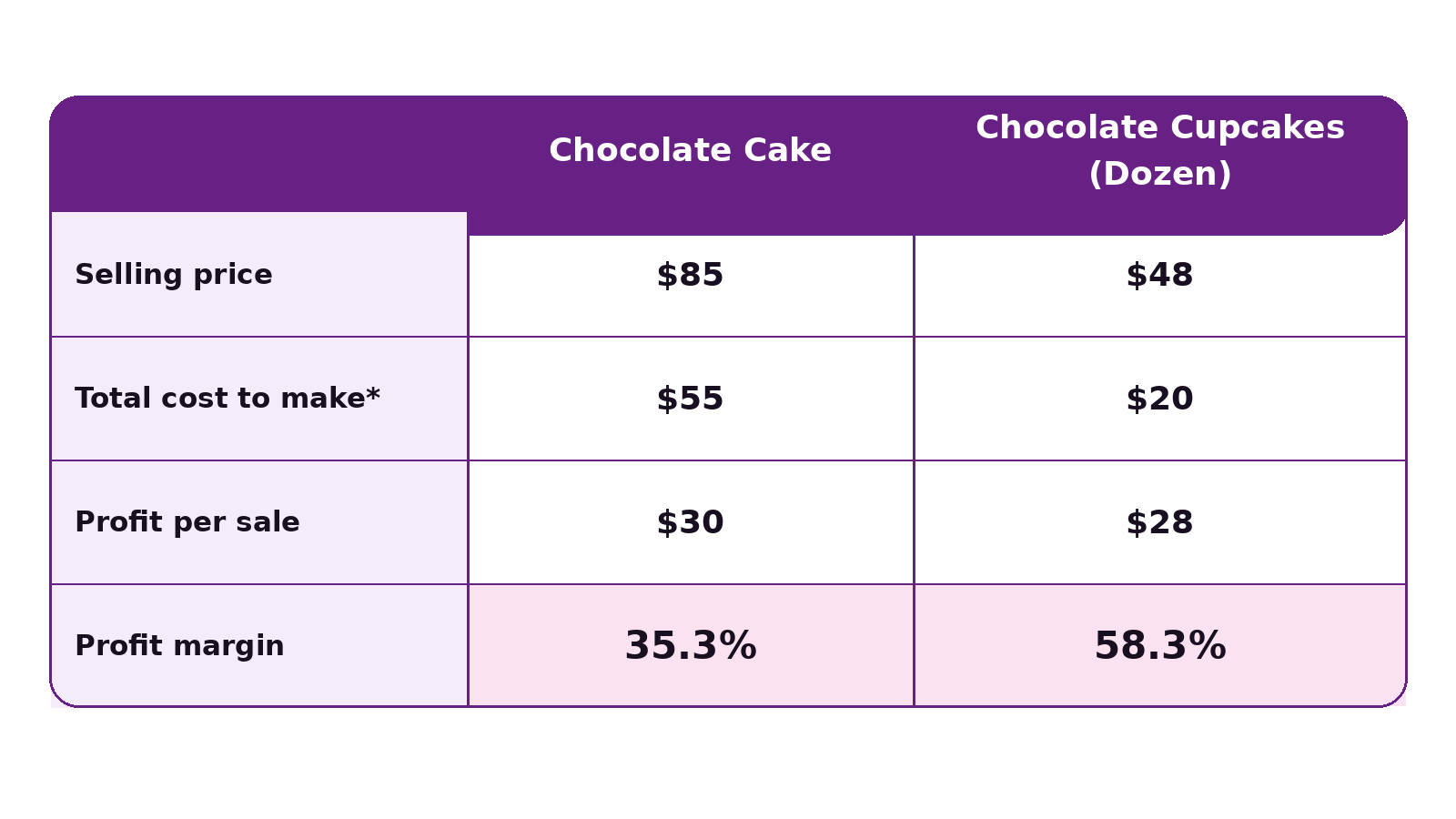
Illustrative costs, including ingredients, packaging, labor, and allocated overhead.
Your chocolate cake brings in more revenue per sale and slightly more profit dollars.
But your cupcakes have a MUCH higher profit margin. And depending on how much time each product takes, the cupcakes might actually be the smarter product to promote.
Now imagine discovering that the product you've been pushing the HARDEST is one of the least profitable items on your entire menu.
Or realizing that a product you barely promote is quietly making you more money than the one everybody knows you for.
THAT is the kind of information that changes how you run your business.
Once you understand your actual product costs and profit margins, you can start making better decisions about what to charge, what to promote, what to bundle, and even what to take OFF your menu.
And THIS is what I mean when I say you need to start thinking like a business owner, not just a baker.
We're Not Bringing "Girl Math" Pricing Into 2027
I LOVE that you're passionate about baking.
I LOVE that you want your customers to enjoy your products.
And I LOVE that you've built something people are willing to pay for.
But I will say this til the day I die, passion doesn't pay your bills.
And customers telling you how talented you are doesn't mean much if you're working 60 hours a week and barely paying yourself.
You deserve to know what your business is actually making.
Not just what you're selling.
And you shouldn't have to spend every Sunday night buried in spreadsheets, piecing together receipts, doing manual math, trying to figure it out.
But plot twist: you don’t have to do the math!
Meet Costli: Pretty Products. Serious Profit.
I spent more than a decade running my own bakery, and since 2017 I've helped bakery owners figure out how to build more profitable, sustainable businesses.
And one thing I know for SURE is that bakers don’t need another reason to work harder. They need BETTER systems.
That's exactly why I created Costli.
Costli is a profitability platform built specifically for bakers who are DONE guessing their prices.
It gives you one place to organize your ingredients, purchase costs, recipes, and products, so you can finally understand what everything actually costs to make.
And instead of manually recalculating every recipe when an ingredient price changes? Update that ingredient cost once, and Costli recalculates the costs of ALL the recipes and products that use it.
You can see your product costs, build pricing with more confidence, and identify which items are actually contributing to your profits.
Because the goal isn't to sell MORE just for the sake of selling more.
The goal is to KEEP more of the money you're already working so hard to make.
So if 2027 is the year you're finally getting serious about your numbers, consider this your sign.
No more pricing by vibes.
No more guessing.
No more booked and busy but BROKE.
It's time to know your costs and grow your profits.